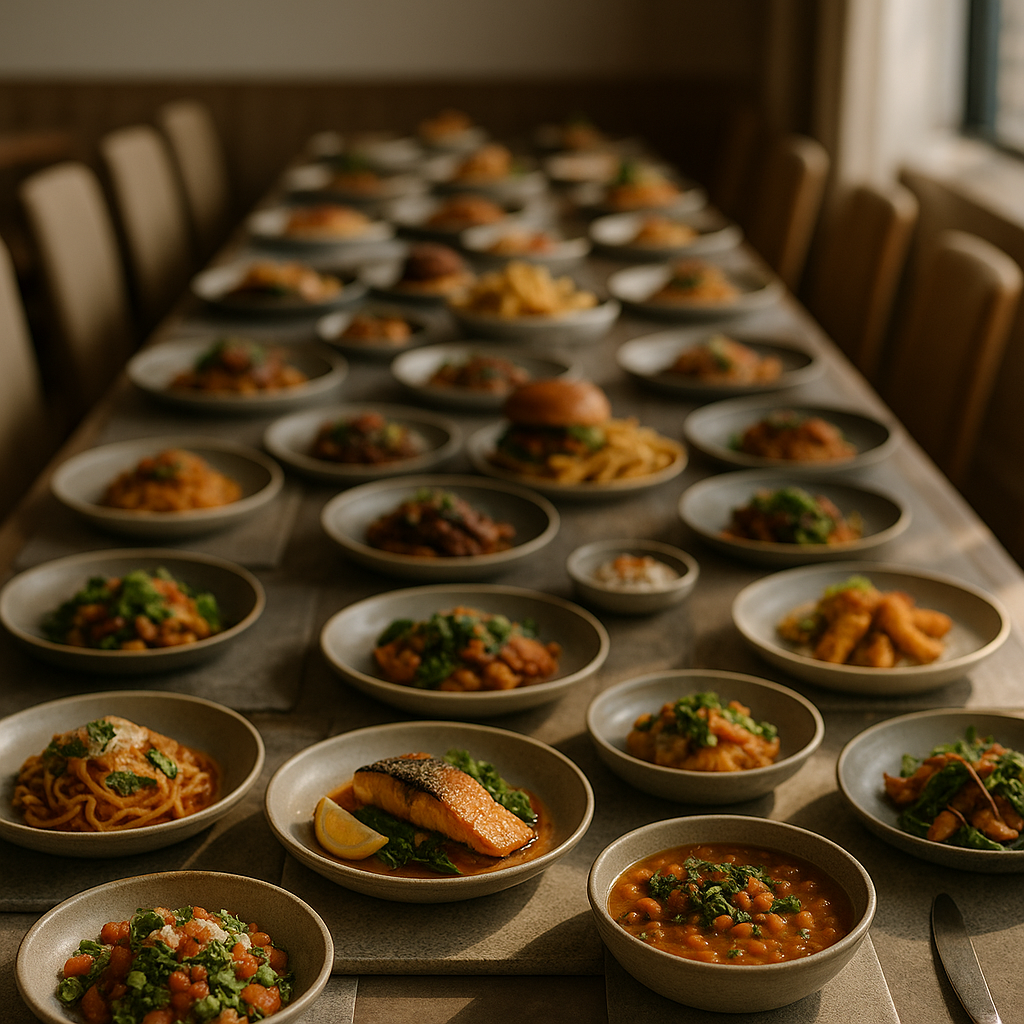
In this case study restaurant chain project, we re-shot 300 dishes in a single afternoon—without closing kitchens or setting up a traditional studio. The brief: replace inconsistent, dated photos with crisp, on-brand images for digital menus and delivery marketplaces. With a lean capture setup and an AI-first post pipeline, the team captured, processed, and delivered at speed. FoodFix handled consistency, background clean-up, and platform-ready exports while the operations crew focused on plating and throughput.
Case study restaurant chain: the brief and constraints
The chain’s marketing team needed a full refresh—every category, every top-seller, and region-specific items. The constraints were typical for multi-site brands:
- A narrow shooting window between prep and dinner rush
- Zero appetite for downtime or on-site studio build-outs
- Menu-wide consistency in angles, lighting, background, and color
- Rapid delivery to update in-store displays, websites, and delivery apps the same week
- Compliance with common marketplace specs (e.g., square and 4:3 crops, file-size ceilings, and safe color ranges)
Success criteria were equally clear: recognizable portions, appetizing texture detail (steam, caramelization, gloss), and images that convert—without slowing service or burdening store staff.
Pre-production at speed: shot list, styling rules, logistics
A fast day starts long before the first plate hits the pass. Here’s how the team set up the afternoon:
- Master shot list: A single spreadsheet with SKUs, category, garnish rules, hero angle, and platform crops. Items were tiered into “must-have,” “nice-to-have,” and “seasonal” so we could protect the core if time compressed.
- Styling rules: A concise lookbook with 6 reference frames—frontal hero (15–25°), three-quarter (35–45°), overhead (90°) for platters, and tight angle guidance for burgers, bowls, and desserts. Plating templates clarified portion symmetry, garnish placement, and sauce finish.
- Lighting plan: One compact key light with a soft modifier and a bounce card. This keeps highlights controllable while giving the AI relighting model consistent inputs.
- Throughput lanes: Prep designated two staging lanes: “Plate & Park” (items ready to shoot) and “Reshoot/Adjust” (items needing tweaks). The runner rotated plates every 60–90 seconds.
- File-naming and handoff: Every capture was named at source with SKU and angle tag to auto-route to the correct style profile and crops.
With this structure, each dish moved from pass to capture to delivery with minimal back-and-forth.
The AI photography pipeline: from snap to menu-ready in 99 seconds
Once the first plates rolled in, the pipeline did the heavy lifting. With FoodFix, each capture followed a predictable path:
- Smart ingest: The system reads the SKU and angle tag, applies the right style profile (light direction, contrast curve, depth-of-field), and queues required crops.
- Clean background and relight: Distracting noise is removed, reflections are tamed, and edge detail (herbs, crumb, steam) is preserved. Relighting normalizes scenes across locations.
- Color fidelity: Skin tones matter in portraiture; color fidelity matters in food. The pipeline balances warmth in proteins, greens in herbs, and whites in plates while avoiding plasticity.
- Texture recovery: Micro-contrast brings back grill marks, frosting swirls, and crumb structure—without making the image crunchy or fake.
- Compliance outputs: The system renders approved crops (1:1, 4:3, and 16:9 where relevant) and respects typical marketplace file-size ceilings.
- Human pass (as needed): Flagged items (e.g., condensation on packaging, off-center garnish) get a quick review and nudge.
- Delivery: Images drop into a shared folder by category and SKU so merchandising teams can update menus in one sweep.
From shutter tap to menu-ready image, the average turnaround per plate was 99 seconds, including variant crops.
Quality and consistency at scale
Consistency is where large photo days live or die. Three principles kept the output tight:
- Angle discipline: Burgers and sandwiches shot in the 35–45° band to show bun crown, protein stack, and melt; bowls overhead to reveal composition; desserts slightly elevated to highlight gloss and height.
- Controlled highlights: A single softened key light ensured appetizing shine on glazes and sauces without harsh specular hotspots. AI relighting equalized any remaining differences between stations and locations.
- Cropping logic: Primary image framed for ordering thumbnails; alternates for hero banners and print. No sudden shifts in horizon line, plate size, or negative space.
The net effect: a menu that looks like it was photographed on the same table, under the same light, regardless of where the dish was cooked.
Results in one afternoon
- 300 dishes captured, processed, and delivered for both marketplace and in-store use.
- Uniform presentation across categories (starters, bowls, mains, burgers, desserts, kids’ meals) with export variants ready for immediate upload.
- Minimal operational drag: plates flowed through the pass at service speed, with no need to cordon off a shooting bay.
While outcomes vary, industry reports indicate that upgraded photography can correlate with noticeable uplifts in menu conversion and order value on delivery apps, commonly cited in the low double-digit range. Your exact results will depend on pricing, promotions, and category dynamics, but better visuals reliably reduce friction at the point of decision.
Mini case: the burger lineup
The chain’s burger range suffered from flat lighting and inconsistent angles, which made patties look thin and buns overly matte. We applied a 40° hero angle, a modest key-light feather to pick up sesame texture, and a micro-contrast boost to the protein edge. Lettuce curl and cheese melt were emphasized, and drips were standardized to a “clean edge” specification to avoid messiness at thumbnail size. The revision instantly clarified stack height and texture, and—crucially—aligned all SKUs so swaps and limited-time offers could be merchandised without disrupting the grid.
What this means for your chain
For regional or national brands, the lesson is straightforward: speed and consistency are not mutually exclusive.
- Time: A focused half-day can cover your core menu, plus alternates and seasonal sets.
- Consistency: One look across every SKU establishes brand trust and makes category navigation easier for guests.
- Cost clarity: You can plan by shot or by package. At €1.5 per shot, budgeting scales linearly; the Pro plan (€45/month, 30 photos) suits ongoing updates; and the full-menu package (€225) is built for complete refreshes. Choose what matches your cadence and menu depth.
By replacing traditional, one-off photo days with a repeatable, AI-led workflow, you can refresh menus more often and stay visually consistent across locations.
How to replicate this playbook in your locations
- Build a master shot list: Include SKUs, angles, garnish notes, and required crops (1:1, 4:3, 16:9 if needed).
- Create a 1-page lookbook: Define 3–4 hero angles, light direction, and backdrop treatment so every team reads the same map.
- Stage a simple capture lane: Key light, bounce, clean surface, and a runner between pass and capture.
- Standardize file naming: SKU-first naming avoids downstream chaos and routes files to the right crops automatically.
- Schedule smart: Shoot shelf-stable items first; time-sensitive melts last; keep hot passes moving.
- Automate the post: Let AI handle background clean-up, relighting, texture recovery, and compliance exports. Human review only where the system flags issues.
Ready to refresh your menu at scale? Start with FoodFix and replicate this exact workflow in your next session.
FAQ
Can we shoot during business hours without disrupting service?
Yes—design the lane to mirror your kitchen’s flow. Use a compact lighting setup, pre-plate garnishes, and keep a runner moving plates every 60–90 seconds. Reserve 10–15 minutes per category for resets and you can cover hundreds of SKUs in a half-day.
What equipment do we need?
A recent smartphone or mirrorless camera, a small soft light (or window light with diffusion), and a white bounce card. The pipeline handles relighting and cleanup, so you don’t need a full studio kit.
Will the images meet delivery marketplace requirements?
The workflow exports platform-friendly crops (e.g., square and 4:3), manages file sizes, and preserves appetizing color and texture. Most partners find marketplace verification straightforward when images follow these conventions.
How fast are the edits delivered?
The processing pipeline returns menu-ready images in about 99 seconds per capture on average, including variant crops. Flagged images (e.g., unusual reflections) may receive a brief human pass.
How should we budget?
Pick the model that fits your cadence: pay-per-shot at €1.5 when you have a fixed list; the Pro plan at €45/month for steady trickle updates (30 photos); or the €225 full-menu package when you want a comprehensive refresh in one go.