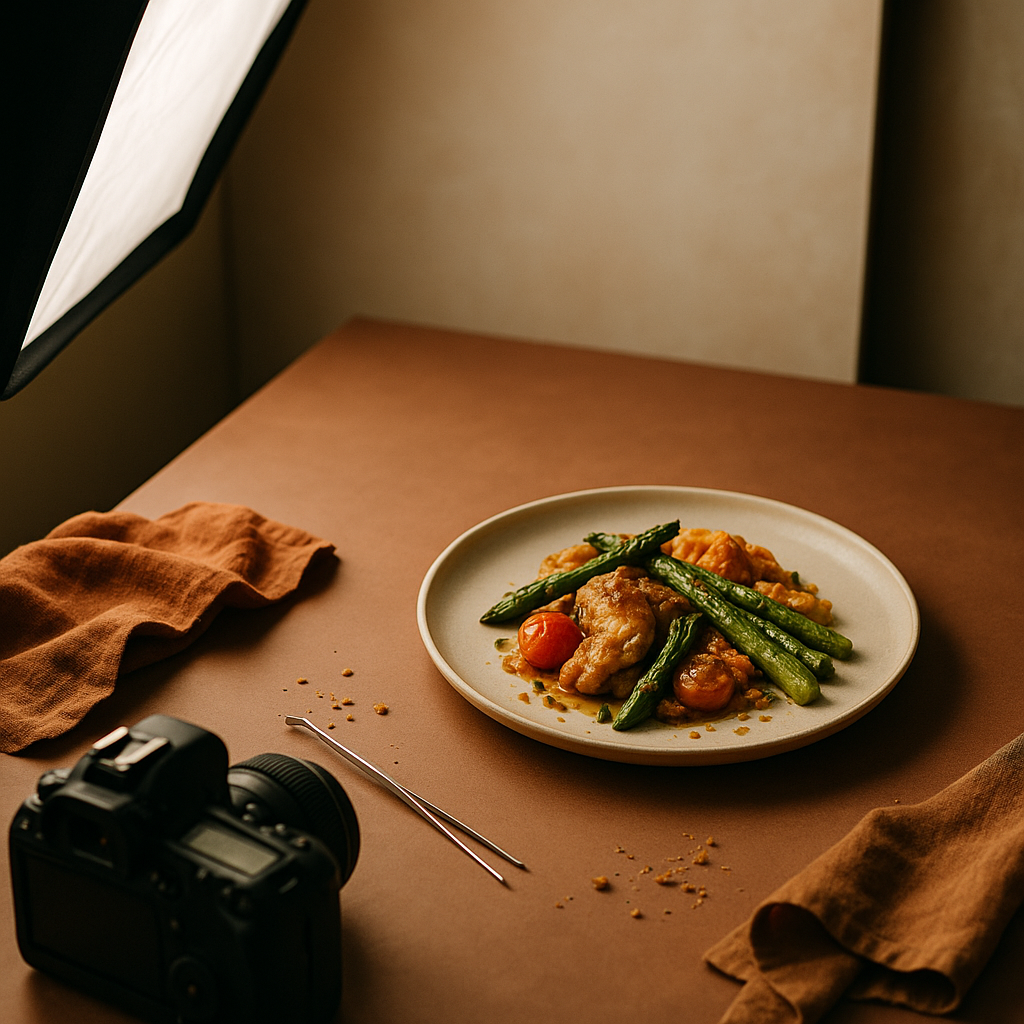
The gap between a delicious plate and a delicious photo
A great dish is built for taste; a great photo is built for persuasion. Cameras flatten texture, mute steam, and exaggerate shine. That is why pro teams rely on food styling tricks: small, ethical cheats that protect texture, shape, and color so a viewer can almost taste the bite. Use them to upgrade your in-house menu images and your delivery listings on Glovo, Uber Eats, and Just Eat.
10 food styling tricks pros swear by
- Undercook for structure: Pull pasta, veg, and proteins 1 to 2 minutes early so edges stay defined. Finish with a quick oil brush or torch instead of more heat.
- Brush for appetizing sheen: A light coat of neutral oil on meats, buns, or roasted veg restores gloss without making the surface look greasy.
- Fake condensation that reads cold: Mix glycerin and water in a spray bottle for beads on bottles and lettuce. Use on shoot-only items, never on food you will serve.
- Keep greens perky: Shock herbs and salad leaves in ice water, then spin dry. Build the plate last so nothing wilts under lights.
- Build height with invisible helpers: Stack pancakes with thin cardboard circles, prop burgers with makeup sponges, and anchor tricky items using museum putty or small T pins.
- Lock in syrup and sauces: On pancakes or French toast, paint a thin layer of oil before pouring syrup so it does not soak in and disappear.
- Create believable steam: Hide a microwaved damp cotton ball or small cloth just behind the dish; it emits soft steam without cooling the food.
- Sharpen grill marks: Score with a hot skewer or give existing lines a quick pass with a small torch to deepen contrast.
- Control reflections: Use white cards to bounce light and black cards to add definition. A cheap circular polarizer on a camera lens can tame glare on soups and glossy glazes.
- Tidy with precision tools: Use tweezers for micro moves, soft brushes for crumbs, and paper towels folded into points for tiny dabs. Keep a hero plate and backup components ready.
Color, composition, and height that sell the bite
- Edit the palette: Limit each frame to 2 to 3 dominant colors and a fresh accent. Think tomato red against green herbs, or golden fries beside a cool gray tray.
- Build in layers: Background, surface, props, and food should stack to create depth. Elevate the hero with a small plate stand or coil of foil hidden below.
- Compose with appetite cues: Odd numbers, diagonal lines, and deliberate negative space keep eyes moving toward the hero texture: the crust, the drip, the char.
- Mind the crop: Leave room for platform overlays and square crops. Shoot wider than you need so the same image works on multiple marketplaces.
Light that flatters food
Great light does 80 percent of the work. Start with side or back light to emphasize texture. Diffuse hard sun with a translucent panel or thin curtain. Fill shadows with a white card; make shape with a dark flag. For phones, stabilize on a tripod and tap to expose for the highlights on the hero area so sauces do not blow out. If using artificial light, one soft key plus a reflector can mimic a window beautifully.
A mini walk-through: turning a burger and fries into a craveable hero
- Pre-select hero components: the most symmetric bun, the crispiest lettuce, the thickest tomato slice, 2 to 3 perfect pickle chips, a meat patty with visible sear.
- Stage height: Place a makeup sponge under the patty, toothpick the tomato so it does not slide, and angle the pickles toward camera.
- Finish and stack: Torch the patty edges, brush the bun lightly with oil, add a micro smear of ketchup at the visible edge so the color reads.
- Fry management: Blanch and double-fry a batch; choose the crispiest pieces. Make a small fry pile with the best shapes, propped on a hidden napkin.
- Lighting and garnish: Backlight, bounce from the front, and add a tiny mist of water on lettuce. Shoot several angles for menu, marketplace, and in-store signage.
This walk-through is repeatable across bowls, pizzas, salads, and desserts: pick a hero, build height, protect texture, and light for appetite.
Workflow that keeps shoots efficient
- Script the session with a shot list tied to menu codes and platforms, so you capture wides, squares, and close crops in sequence.
- Prep multiples of each component to swap in fast as items tire under lights.
- Tether or review on a larger screen to spot crumbs, fingerprints, and crooked garnishes before they become editing chores.
- Store assets with consistent names and color across dishes so your brand feels unified everywhere. If you prefer a hands-off route, FoodFix standardizes output for menus and delivery apps with consistent styling and framing at scale.
When to DIY and when to automate
If you shoot occasionally and enjoy the process, a small DIY kit and these techniques will raise your hit rate dramatically. When you need hundreds of consistent, platform-ready photos without scheduling a studio day, automation pays off. FoodFix replaces traditional food photographers for restaurant menus and delivery marketplaces, delivering studio-quality images with a 99-second turnaround. Pricing is straightforward: 1.5 euro per shot, a 45 euro per month Pro plan with 30 photos, or a 225 euro full-menu package for fast launches. FoodFix is built for teams that want quality, speed, and uniformity across Glovo, Uber Eats, and Just Eat.
Ready to scale pro-looking images without the logistics? Try FoodFix and turn every dish into a hero today.
FAQ
Are food styling tricks deceptive?
The goal is to show the true promise of the dish at its best. Non-edible props or chemicals belong only on shoot-only items. Keep a dedicated hero plate for camera, and a fresh plate for serving.
Can I get great results with a phone camera?
Yes. Use window light from the side or back, stabilize with a small tripod, and diffuse harsh sun. Clean the lens, lock focus on the hero area, and raise exposure only until highlights hold detail.
How do I keep ice cream or cold desserts from melting?
Pre-chill bowls and spoons, scoop onto a frozen tray, and work in small batches. Build the set first, bring in the dessert last, and rotate scoops as they soften.
What backgrounds and surfaces work best for delivery apps?
Neutral, lightly textured surfaces like matte gray, wood, or stone keep attention on the food and compress well for web. Avoid busy patterns. Leave safe space for cropping and any in-app overlays.